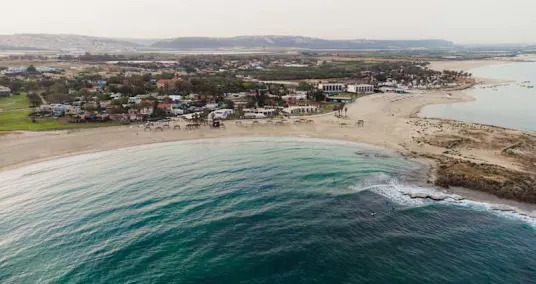
The discovery was made in an ancient shipwreck in the Dor Lagoon near the Carmel Coast, where archaeologists recovered nine pieces of unprocessed iron known as “blooms.”
Researchers from the University of Haifa said Wednesday that an underwater excavation off Israel’s northern Mediterranean coast uncovered what they described as the earliest known cargo of raw iron transported by ship, dating back around 2,600 years, Xinhua reported.
The discovery was made in an ancient shipwreck in the Dor Lagoon near the Carmel Coast, where archaeologists recovered nine pieces of unprocessed iron known as “blooms.” According to the university, the find provides direct evidence of how iron was transported in its earliest commercial stages.
The material was preserved in its original form, having solidified directly in a smelting furnace without undergoing forging or further refinement. Researchers said this distinguishes the cargo from later iron artifacts that typically show signs of shaping or tool-making.
Unlike copper and bronze, which could be melted into liquid form in ancient production processes, iron was heated with charcoal to produce a solid, porous mass. That mass was generally hammered to remove impurities and create denser material suitable for tools and implements.
The recovered blooms showed no indication of that secondary processing stage, suggesting they were transported immediately after production.

Earliest iron shipment discovered in ancient Mediterranean wreck
To determine the age and condition of the cargo, researchers conducted microscopic and chemical analyses.
Radiocarbon dating was also carried out on charred wood embedded in one of the pieces, helping confirm the timeline of the shipment. The findings were published in the journal Heritage Science.
Researchers said the cargo indicates that iron was being moved in raw form from production sites to other locations for further processing, pointing to a level of specialization in ancient manufacturing and trade networks in the Mediterranean.
The University of Haifa said the discovery provides new insight into early iron production and distribution practices in the region.
LATEST POSTS
- 1
 Like 'accelerating from stationary to supersonic flight': Europe's Hera probe boosts speed, stays on course for November asteroid rendezvous
 - 2Jamaica reports deadly leptospirosis outbreak after Hurricane Melissa
- 3Was This Driver Simply Having Some good times Or Behaving Like An Ass?
- 4You finally got a doctor's appointment. Here's how to get the most out of it
- 5Gartex Texprocess India to showcase innovations across textile ecosystem



- India’s delayed climate plan sets modest emission target
- How much should a kid's birthday party cost? One mom spent $190 for pizza and ice cream at a park. Another paid $2K for a playspace and goodie bags.
- Northern lights chances rise for Christmas as space weather remains unsettled
- Limited Rain Chances in Brazil Boost Coffee Prices
- A company is trying to unlock a key to aging, in a long-overlooked body part
- The most effective method to Succeed in Your Web based Advertising Degree: Procedures for Progress
- 'We need everyone,' wounded reservist urges Knesset panel to advance haredi draft law
- Journalists killed by Israeli strike in southern Lebanon
- San Francisco sues 10 companies that make ultraprocessed food